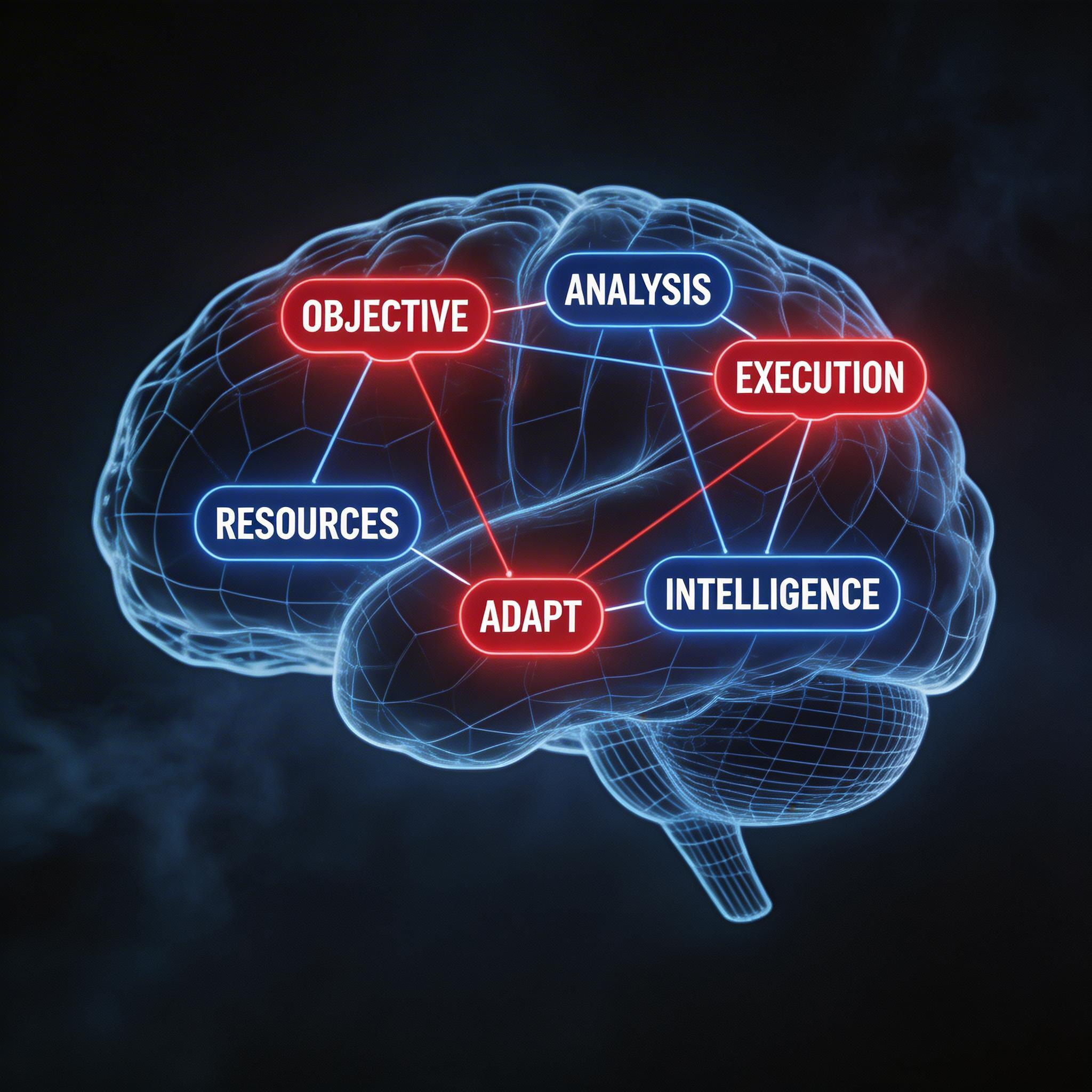
In the competitive world of browser gaming, where thousands of players vie for the top spots on global leaderboards, what is it that separates the elite from the average? While reaction time and mechanical skill play a role, the true differentiator is the "Mental Edge"—a combination of psychological resilience, strategic foresight, and the ability to maintain focus under extreme pressure. In the 2026 digital landscape, where simulations have become increasingly complex, the battle is won in the mind long before the first click is made.
1. The Psychology of Focus: Hyper-Focus and Flow States
The first pillar of the pro-level mindset is "Hyper-Focus." In games like Grid Lock or Kinetic Command, the margins for error are razor-thin. A single distracted second can lead to a catastrophic mistake. Pro players develop the ability to enter a "Flow State," a psychological phenomenon where they become completely absorbed in the task at hand. This state allows them to process information faster and react more instinctively than their casual counterparts. It is a form of "Cognitive Synchronization" where the barrier between the player and the interface disappears.
To achieve this level of focus, elite players often use "Environmental Conditioning." They create a dedicated space for gaming that is free from distractions. They use specific sensory cues—like a particular playlist or a certain type of lighting—to signal to their brain that it's time to enter a high-performance state. This "Ritualized Entry" into the game world ensures that they are mentally prepared from the first click. For the casual player, gaming is often a background activity; for the pro, it's a primary objective that demands 100% of their cognitive resources. This "Mental Sanctum" is where the elite are forged.
Furthermore, we must consider "Attention Budgeting." A pro player knows that focus is a finite resource. They don't waste it on low-stakes moments or irrelevant visual data. Instead, they practice "Selective Filtering," ignoring the flashy animations and focused purely on the critical vectors and resource counts. This "Economic Use of Focus" allows them to stay sharp for hours, whereas a casual player's performance often degrades rapidly due to cognitive fatigue.
2. Strategic Foresight and Anticipation: The Art of Pre-Simulation
While casual players tend to react to what's currently happening on the screen, pros are always looking several steps ahead. This is "Strategic Foresight." In a game like Industrial Echo, this might mean planning a complex merge chain several tiers in advance. In a high-speed racing game, it means anticipating a corner long before it appears. This ability to "Pre-Simulate" future states of the game is what allows pros to make decisions that seem almost clairvoyant.
Developing this skill requires a deep understanding of the game's underlying mechanics. Pro players don't just play the game; they study it. They analyze the rules, the physics, and the probabilities to build an accurate mental model of how the game behaves. This "Expert Knowledge" allows them to anticipate how a certain move will ripple through the game world. When a pro player makes a move, they aren't just reacting to the present; they're shaping the future. This "Proactive Playstyle" is a hallmark of elite performance, turning the game into a "Self-Fulfilling Prophecy" of tactical victory.
Advanced anticipation also involves "Pattern Recognition." Elite strategists have seen thousands of board states and can recognize common "Tactical Archetypes" instantly. This allows them to bypass slow analytical thinking and move straight to intuitive execution. By building a massive "Mental Library" of scenarios, they can respond to complex problems with the speed of a reflex. This is why experience is so highly valued in the mmm community.
3. Maintaining Resilience Under Pressure: Choke Mitigation
High-stakes gaming is inherently stressful. Whether it's a tight deadline in a puzzle game or an aggressive opponent in a strategy match, the pressure can be overwhelming. Casual players often "Choke" in these situations—their performance degrades as their stress levels rise. Pro players, on the other hand, thrive under pressure. They have developed "Psychological Resilience," the ability to maintain their performance even in the most challenging circumstances.
This resilience is often built through "Exposure Therapy." Pros deliberately seek out high-pressure situations to habituate their brain to the stress. They play in high-stakes tournaments and compete against the best players in the world to build their confidence. They also use "Stress Management Techniques" like controlled breathing and positive self-talk to stay calm. For a pro, pressure is not a threat; it's a challenge that they are uniquely equipped to meet. This "Growth Mindset" allows them to learn from their failures rather than being discouraged by them. Every "Tactical Heartbreak" is seen as a lesson for the next encounter.
We also see the use of "Emotional Anchoring." When a match starts to go south, a pro will use a specific physical or mental anchor to ground themselves and prevent an emotional spiral. This "Equanimity in Chaos" is what allows them to pull off incredible comebacks. While the casual player is already thinking about the loss, the pro is focused purely on the very next tactical move. This "Granular Focus" is the ultimate shield against the pressure of the moment.
4. The Importance of Data and Analytics: The Quantified Gamer
Finally, the modern pro player is a "Data-Driven Competitor." They don't just rely on intuition; they use data to identify their strengths and weaknesses. They record their matches, analyze their performance metrics, and use specialized tools to identify areas for improvement. This "Continuous Iteration" on their gameplay is what allows them to stay at the top of their field. They are always looking for a "Marginal Gain"—a small improvement that can give them a competitive advantage.
In 2026, the best players use AI-powered analysis tools to deconstruct their matches. These tools can identify subtle patterns in their play that would be invisible to the human eye. By analyzing thousands of hours of gameplay, these tools can provide personalized coaching that is tailored to the player's unique style. For the pro, gaming is an engineering problem to be solved with data and logic. This "Analytical Approach" is what ultimately gives them the edge over the casual player who relies on "Gut Feeling." They aren't just playing; they're "Optimizing a Biological Machine."
This data-driven approach also extends to "Meta-Game Analysis." Pros track the shifting trends in the global player base, identifying "Emergent Metas" before they become common knowledge. By staying ahead of the curve, they can adapt their strategies to counter the most popular tactics of the day. This "Information Advantage" is a critical component of the mental edge. In the world of mmm, knowledge is the most powerful weapon in your arsenal.
The journey from casual to pro is a mental marathon. It is a process of stripping away the ego and replacing it with pure, analytical logic. Visit our Sector Analysis to start your own psychological conditioning and find the edge you've been looking for. The command center is waiting.